
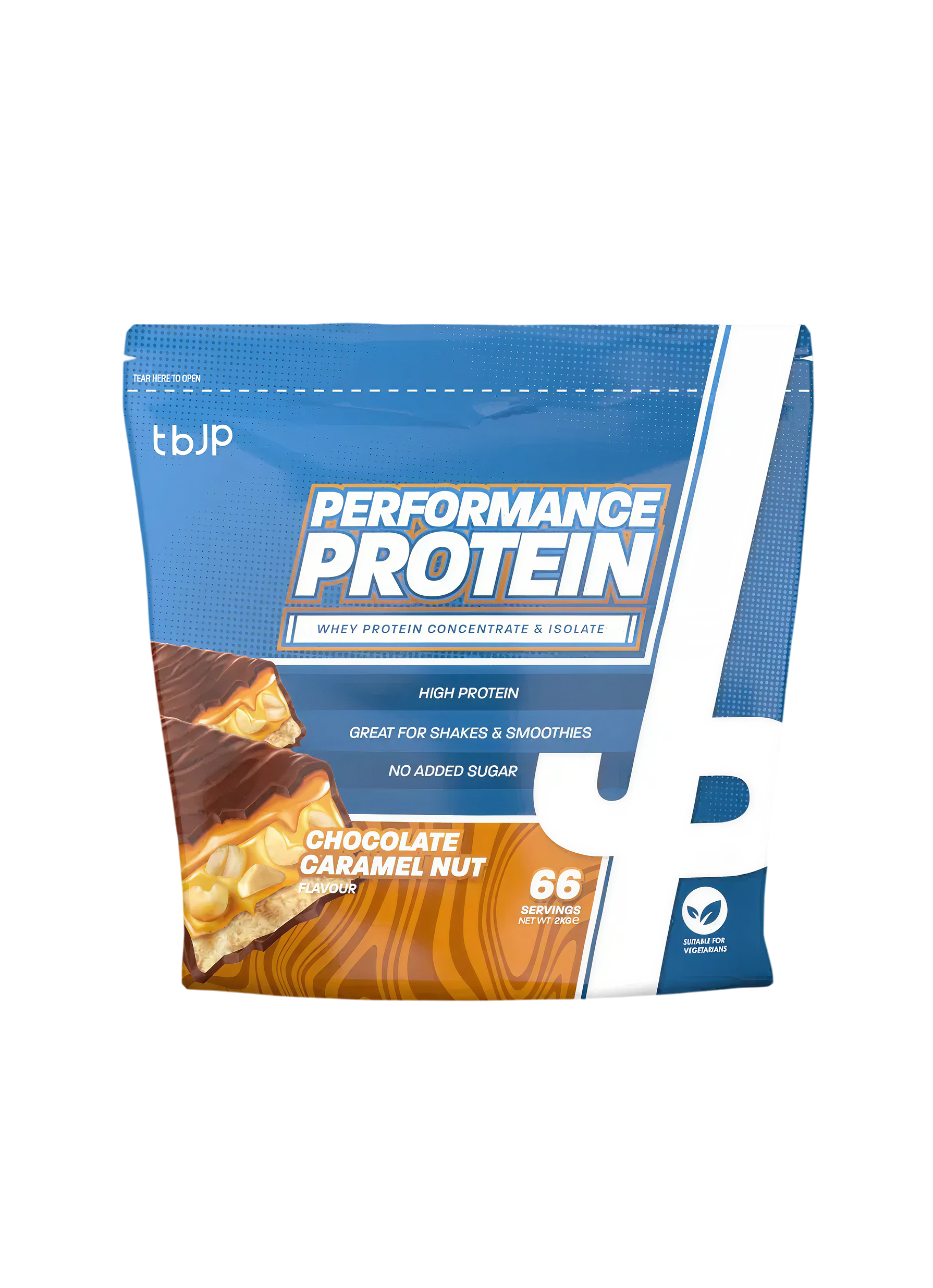
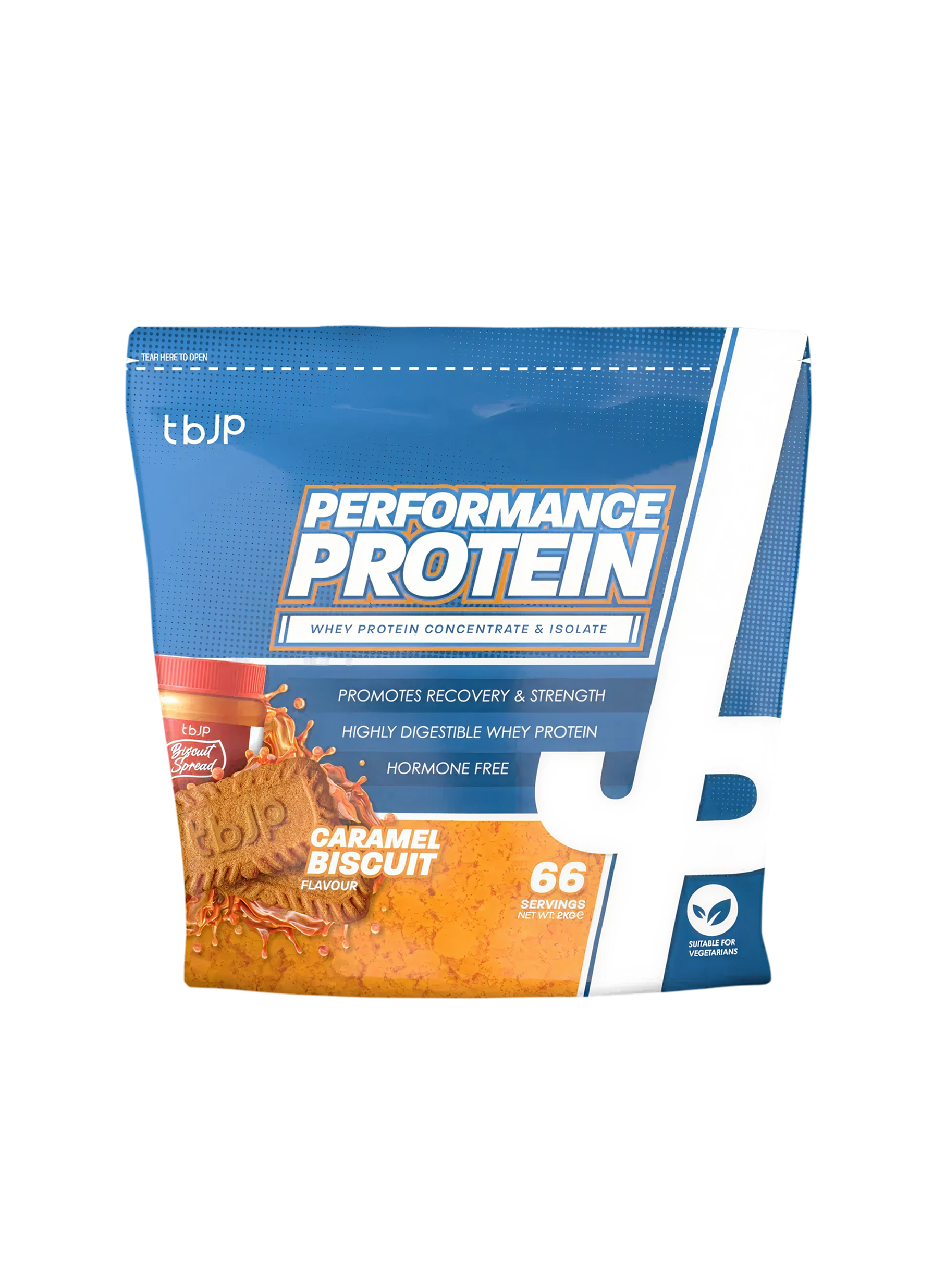
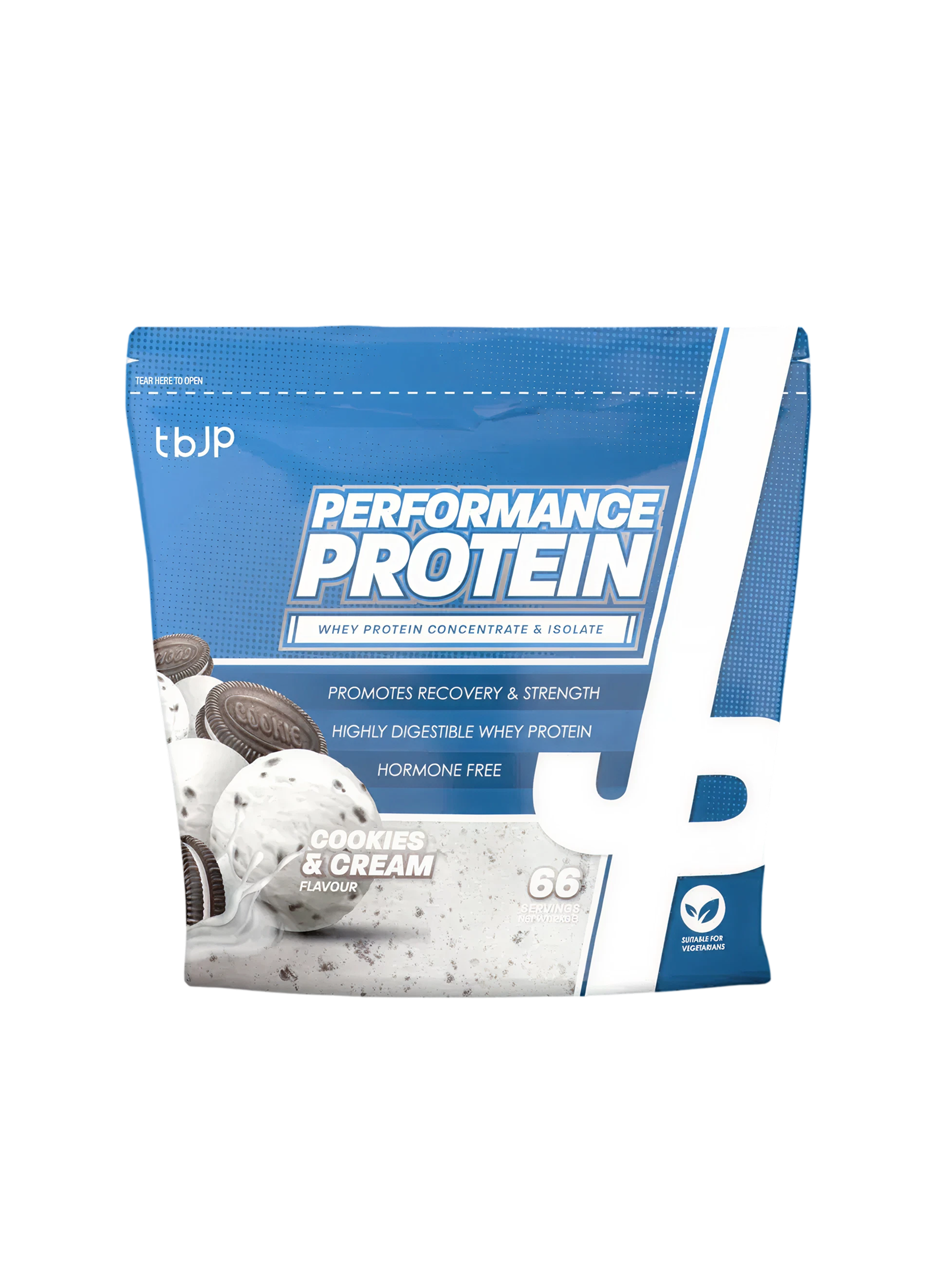
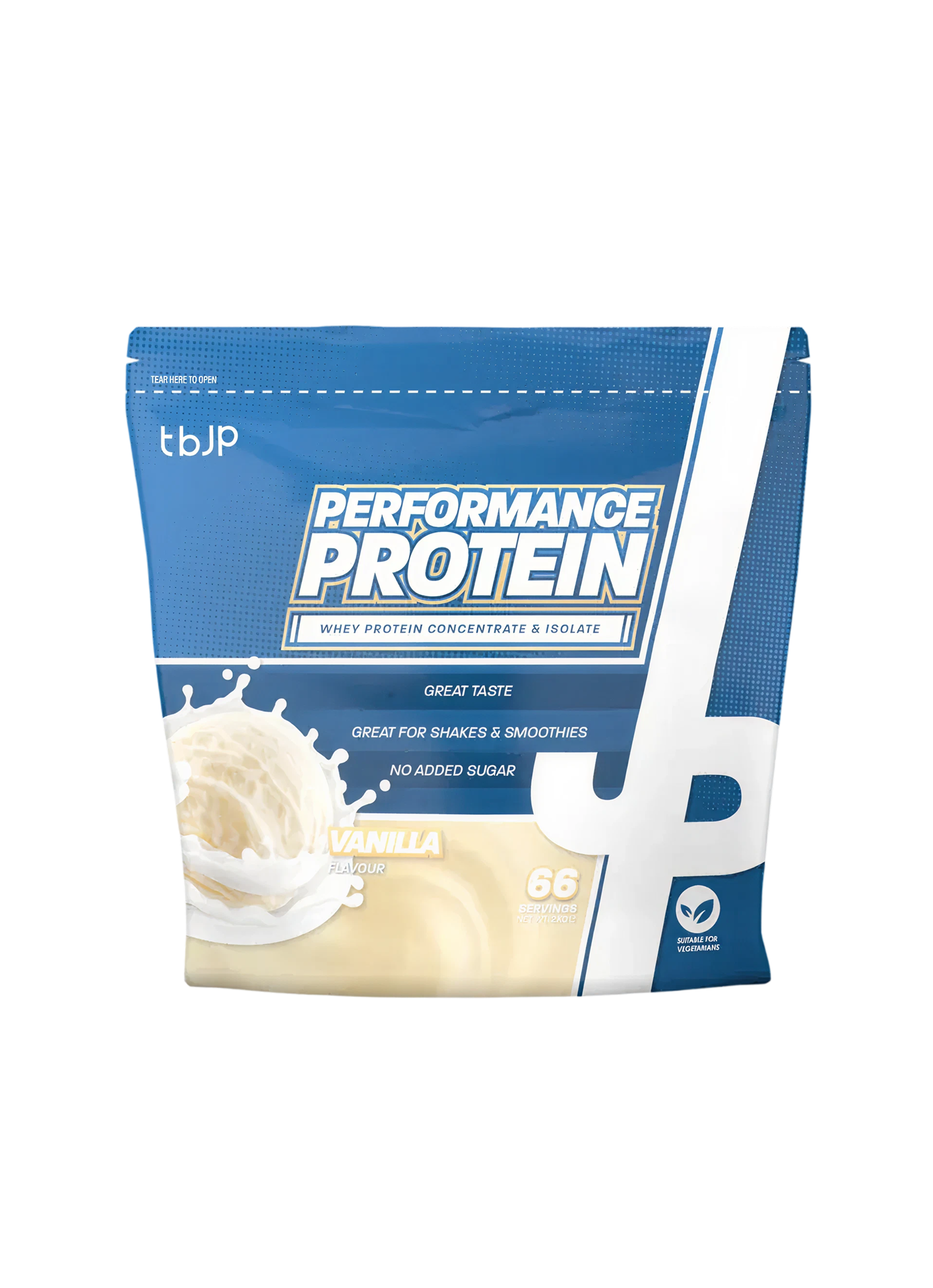
Performance Protein Premium Whey Protein Powder — Whey Protein Blend for Daily Training Protein Powder by Trained by JP Nutrition
Start at $36
Performance Protein is a premium whey blend designed for athletes who value consistency, digestion stability, and long-term adherence. Its combination of whey concentrate and whey isolate provides a balanced, predictable protein source built for structured training routines instead of short-lived novelty.
01 Core Strengths
of the Performance Protein Whey Blend
-
Balanced whey blend for clean daily digestion
-
Smooth mixability with minimal thickeners
-
Controlled flavour system built for long-term adherence
-
Reliable amino acid profile for recovery
02
TL ; DR Understanding Performance Protein
at a Glance
Performance Protein is engineered to behave the same way every time you use it: clean digestion, stable taste, and predictable absorption. Where many mass-market proteins rely on heavy sweetness and artificial creaminess, Performance Protein instead prioritizes the essentials — stability, solubility, and a balanced whey profile that supports daily training demands. It has no interest in sensory overload or dessert-like theatrics; its purpose is durability. Over months of training cycles, that consistency becomes its real value. In one sentence: Performance Protein is a disciplined, reliable protein source designed for serious athletes who treat supplementation as part of their craft.
03 Why Performance Protein Matters: Digestion, Recovery, and Consistent Daily Use Our review.
Consistent protein intake is a cornerstone of athletic progression, yet many powders undermine that consistency. They taste impressive on day one but introduce digestive discomfort, overwhelming sweetness, or sensory fatigue by week three. Performance Protein avoids this trap by anchoring itself in restraint — clean structure, measured formulation, and a flavour design meant to disappear into routine rather than dominate it.
The blend of whey concentrate and whey isolate reflects a clear functional philosophy. Whey concentrate carries the foundational nutrition of minimally processed whey: intact microfractions that support immune response, sustained recovery, and a more rounded amino acid release. But concentrate alone introduces variability in lactose content and digestive load. Whey isolate counterbalances this naturally; through higher filtration, it removes a significant portion of lactose and fats, making digestion faster, lighter, and more predictable. The structural benefit of this marriage is subtle but meaningful: the protein empties from the stomach cleanly, without lingering heaviness, yet maintains enough nutritional density to be genuinely satisfying.
This formula also rejects the modern tendency to engineer the shake into a dessert. Instead of masking poor raw materials with gums and sweetness, Performance Protein uses minimal thickening agents — just enough to stabilize suspension, not enough to create artificial body. This means the shake remains fluid, almost transparent in texture: it mixes instantly in water, integrates seamlessly into oats or yogurt, and never overwhelms the palate. Over time, this restraint becomes a significant advantage. A protein you can take twice a day without sensory burnout is more valuable than a protein that impresses immediately but fades under the pressure of routine.
The flavour system follows the same philosophy. Instead of intensity, it prioritizes balance — clean notes, moderate sweetness, and no lingering aftertaste. This is deliberate. Long-term adherence depends not on excitement but on neutrality: a flavour that does not clash with your daily rhythm, that you do not dread after a hard training session, and that still works when appetite is low during dieting phases. Performance Protein understands that athletes need predictability more than novelty.
In practical use, what stands out is the formula's honesty. Nothing is hidden. If your diet is structured, if your hydration is correct, if your training creates real recovery demands, the protein simply supports the process with quiet precision. It digests cleanly before training, replenishes effectively after, and integrates into meals without dominating them. It becomes part of the workflow — like a well-fitted lifting belt or a consistent warm-up sequence — an instrument of discipline rather than indulgence.
Performance Protein is built not for the excitement of the first scoop but for the integrity of the hundredth. Its true strength is longevity: the ability to remain stable, digestible, and reliable regardless of the phase of training you are in. For athletes who prioritize routine over novelty, it becomes a genuine long-term ally.
04
The Formula From the Inside Out: Whey Concentrate, Whey Isolate & Functional Ingredients
Features & Benefits
Before examining each component individually, it is important to understand the mechanical logic behind Performance Protein. A whey blend is not merely a mixture of concentrated and isolated proteins — it is a nutritional system shaped by filtration stages, lactose content, amino acid density, solubility behavior, and long-term adherence patterns. Most protein powders fail not because of poor raw materials, but because their internal balance between taste, digestion, and performance is structurally unstable. Performance Protein corrects this by treating each ingredient as a functional tool rather than a decorative addition.
Whey Concentrate (WPC)
Whey concentrate is the most structurally complete form of whey. It retains bioactive fractions such as immunoglobulins, lactoferrin, and growth-supporting peptides. These compounds contribute to immune resilience, recovery quality, and sustained amino acid availability — elements that matter deeply for athletes who train frequently. The presence of small amounts of fats and carbohydrates slows digestion slightly, allowing for a smoother, more gradual delivery of amino acids into circulation. This natural pacing reduces the sharp rises and drops that can occur with isolate-only formulas. In Performance Protein, concentrate provides the nutritional backbone: density, fullness, and a mild creaminess without reliance on artificial thickeners. Crucially, the concentrate chosen is highly filtered, minimizing the digestive burden often associated with lower-quality versions.
Whey Isolate (WPI)
Whey isolate enters the system with a different role: purification and acceleration. Its advanced filtration reduces lactose, fats, and residual carbohydrates, leaving a protein profile that is exceptionally light, rapidly absorbed, and easy on the stomach. Isolate is particularly valuable for athletes consuming protein before training, when heaviness or discomfort can affect performance. It also improves the solubility of the final blend, making the powder mix more efficiently in water and preventing sedimentation. The relationship between concentrate and isolate is calibrated deliberately — isolate reduces digestive friction while concentrate maintains nutritional completeness. This interplay is what allows Performance Protein to behave consistently across multiple servings per day.
Xanthan Gum
While many commercial proteins rely heavily on thickening agents to simulate richness, Performance Protein uses xanthan gum in minimal, controlled amounts. Its purpose is not aesthetic but structural: it stabilizes the suspension of protein particles, allowing the shake to remain uniform without becoming viscous. Overuse of gums can create bloating, gastric stalling, and an artificially heavy mouthfeel — all of which undermine long-term adherence. In Performance Protein, the restraint shown in gum usage reinforces the blend's commitment to digestion-first functionality.
Flavour System and Sweeteners
Sweetness and flavour intensity determine whether a protein survives months of consistent use. Performance Protein uses sucralose sparingly, pairing it with natural and nature-identical flavourings engineered around subtlety rather than shock value. The objective is a flavour curve that remains stable across hundreds of servings — enjoyable, but never intrusive. This balance allows the powder to function in water, oats, yogurt, and cooking without overpowering other components. It also prevents the taste fatigue that derails dietary discipline during calorie deficits. The flavour system is an example of engineering restraint: durability is prioritized over intensity.
05
How to Use Performance Protein: Pre-Workout, Post-Workout, Meals & Daily Routines
Real-World Performance
Disciplined Daily Use
Performance Protein is designed for athletes who rely on structured habits. Its digestion profile remains stable across contexts — morning routines, pre-training meals, post-training recovery, or calorie-restricted phases. The shake mixes instantly, leaves no residue, and clears the stomach quickly, allowing training sessions to begin without heaviness. This predictability is what makes it work in disciplined environments.
Before Training — Stomach Comfort and Lightness
Many athletes struggle with pre-workout protein due to slow gastric emptying. Performance Protein behaves differently. Its balanced whey matrix digests rapidly enough to avoid discomfort, while still providing a useful amino acid foundation before training. This makes it suitable for morning sessions, lunchtime workouts, and days when appetite is low. The shake is light, non-foaming, and non-bloated — qualities that matter when training intensity is high.
After Training — Fast Return to Baseline
Post-workout digestion is where instability often appears. Rich, dessert-style proteins linger in the stomach, slow recovery meals, and create inconsistent hunger signals. Performance Protein clears this bottleneck. Its isolate component accelerates absorption, while the concentrate provides sustained release. The result is reliable post-training refuelling that does not interfere with subsequent meals or macros. The texture is intentionally thin, allowing carbohydrates and electrolytes to layer seamlessly alongside it.
In Oats, Yogurt, or Creative Meal Prep
A good protein must perform outside the shaker. Performance Protein integrates smoothly into oats, yogurt, cream of rice, or baking without turning gluey or overly sweet. Because sweetness is controlled, it enhances rather than dominates recipes. For athletes who prepare meals in bulk, this versatility means the protein becomes a modular building block rather than a sensory obstacle.
06
Performance Protein Compared to the Most Popular Whey Proteins: Gold Standard, Impact Whey, ISO100, Bulk, Kaged & Casein
Comparisons
Performance Protein vs Optimum Nutrition Gold Standard — Mass Appeal vs Daily Discipline
Gold Standard is designed as a universally accessible whey. Its flavour systems are engineered to appeal immediately, with pronounced sweetness and a familiar dessert-like profile. Its blend is concentrate-heavy, making it cost-effective and widely tolerated, but also prone to moderate lactose variability. For casual gym-goers, it hits the checklist: enjoyable, easy, predictable enough.
Performance Protein is built for a different user — the athlete who consumes whey daily, sometimes twice a day, and needs a formula that behaves consistently without sensory overload. Its restrained flavouring, minimal thickeners, and balanced concentrate–isolate blend make digestion quieter and more repeatable. It integrates into routine instead of dominating it.
Verdict: Gold Standard for broad enjoyment; Performance Protein for structured, discipline-based training.
Performance Protein vs Myprotein Impact Whey — Budget Convenience vs Digestive Stability
Impact Whey is a budget-first protein. Its concentrate-heavy structure keeps costs down but introduces fluctuations in lactose tolerance, texture, and mixability. It serves beginners well, or lifters looking for affordable volume. But digestion can vary from batch to batch, and flavours are often aggressively sweet.
Performance Protein is engineered for stability. If you train four to six times per week, want predictable digestion, and dislike overly sweet formulas, it offers a clear upgrade. Its isolate inclusion and minimalistic thickening approach create a cleaner, lighter shake that fits into disciplined routines.
Verdict: Impact Whey for cost-driven users; Performance Protein for lifters who prioritize digestion and consistency.
Performance Protein vs Dymatize ISO100 — Speed-First Efficiency vs Balanced Daily Function
ISO100 is a hydrolyzed isolate: extremely fast, extremely light, nearly zero lactose. It is ideal for cutting phases, athletes with severe digestive sensitivity, or those who need rapid absorption with no fullness. But its thin texture and clinical taste can feel unsatisfying for daily use.
Performance Protein offers a middle path — fast enough for post-training use, yet structured enough to provide satiety in meals. It is the more versatile option, suitable for year-round use instead of specific phases.
Verdict: ISO100 for extreme speed and low lactose; Performance Protein for daily balance.
Performance Protein vs Bulk Whey Protein — Broad Sweetness vs Functional Restraint
Bulk's whey offerings focus heavily on flavour innovation. They are made to taste indulgent — thick textures, dessert profiles, heavy sweetness. This appeals to users who want their shake to feel like a treat. However, this intensity often leads to taste fatigue and inconsistent digestion.
Performance Protein is intentionally restrained. Its sweetness is measured, its texture is light, and its digestion is stable. It is not trying to imitate dessert; it is trying to support routine.
Verdict: Bulk Whey for dessert lovers; Performance Protein for athletes who need a protein that never becomes tiring.
Performance Protein vs Kaged Whey Isolate — Ultra-Premium Isolation vs Balanced Utility
Kaged focuses on purity and microfiltration, producing an isolate-only formula with extremely low lactose and clean ingredient panels. It is excellent for individuals with high sensitivity and for those seeking maximal purity. The trade-off is cost and reduced satiety.
Performance Protein is more versatile: it offers balanced absorption, more recipe flexibility, and a more approachable price while still delivering clean digestion.
Verdict: Kaged for isolate purists; Performance Protein for athletes needing an everyday workhorse.
Performance Protein vs Casein — Slow-Release Night Strategy vs Daily Adaptability
Casein is fundamentally different: slow-release, thick, and designed for overnight amino acid delivery. It is ideal before sleep but poorly suited for pre-training or quick digestion. Its texture is dense, often pudding-like.
Performance Protein offers faster digestion, lighter texture, and far greater versatility. It can be used morning, pre-training, post-training, or mixed into meals without disrupting timing or comfort.
Verdict: Casein for night-time recovery; Performance Protein for all-day integration.
07 Pros of Performance Protein
08 Cons to Consider Before Buying
09 Should You Buy Performance Protein? Our Recommendation
Choose Performance Protein if you value discipline, routine, and digestive reliability. For athletes who see supplementation as a long-term practice, this formula integrates seamlessly into daily life — stable in flavour, predictable in digestion, and structurally designed for adherence. It is not built to impress; it is built to endure.
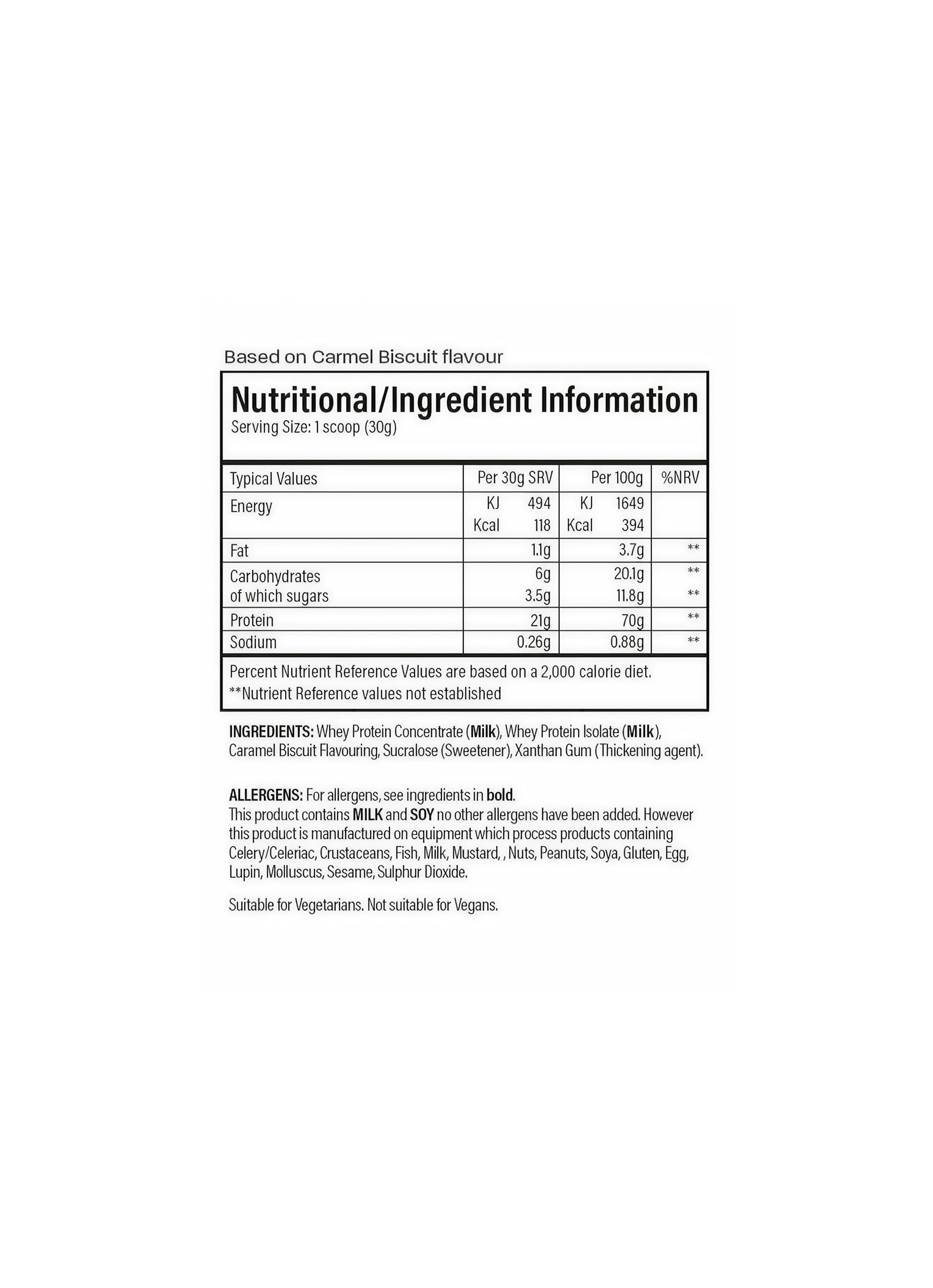
10 Full Ingredient List, Nutrition Information & Available Flavors
11 FAQ: Whey Protein, Digestion, Lactose, Usage & Storage
Is whey protein bad for you?
Whey protein is not inherently bad for you. In fact, for most people, it is one of the most beneficial and well-tolerated protein sources available due to its complete amino acid profile and rapid absorption. Problems typically arise only when the product is of poor quality, consumed in quantities far exceeding the individual's needs, or used by people with underlying dairy allergies or significant lactose intolerance. When sourced from high-quality filtration processes, whey protein supports muscle repair, stabilizes appetite, enhances recovery, and helps regulate metabolic health. Concerns such as kidney strain or digestive issues generally come from myths or misuse rather than whey protein itself. For healthy individuals, whey protein is considered safe and effective, provided intake aligns with daily protein requirements and not as a substitute for overall balanced nutrition.
Is whey protein gluten free?
Whey protein is naturally gluten free because it is derived from milk, which contains no gluten. However, not all whey protein powders are certified gluten free. Some may be processed in facilities that also handle gluten-containing ingredients, or include flavourings, thickeners, or additives that introduce cross-contamination risks. For individuals with celiac disease or severe gluten sensitivity, choosing a certified gluten-free protein powder is essential to avoid trace exposure. For others, naturally gluten-free whey proteins present no issue. The key is to verify the brand's manufacturing practices and any third-party testing or certifications.
Is whey protein healthy?
Whey protein is widely considered healthy because it provides a concentrated dose of essential amino acids in a form that is both highly digestible and rapidly absorbed. It helps preserve muscle mass, supports metabolic rate, reduces appetite, and improves recovery after exercise. Whey also contains bioactive peptides that may enhance immune function and reduce inflammation. Its health benefits extend beyond athletes; older adults, individuals with limited appetite, and people with weight-loss goals all benefit from its efficiency and convenience. The only caveat is ingredient quality: a clean whey protein with minimal additives is far healthier than one loaded with sugars, fillers, or low-grade dairy components.
Is whey protein vegetarian?
Yes, whey protein is vegetarian because it is derived from milk and does not involve slaughter or the use of animal tissue. It is suitable for lacto-vegetarians and for individuals who consume dairy. However, it is not vegan because it is still an animal-derived product. The distinction is important: vegetarians can safely use whey protein, while vegans must choose plant-based alternatives. Provided the user tolerates dairy, whey protein is one of the most nutritionally efficient vegetarian protein sources available.
Where does whey protein come from?
Whey protein comes from the liquid portion of milk that separates from the solid curds during cheese production. Traditionally considered a by-product, whey is now valued for its exceptional protein quality. After separation, it is filtered to remove most of the fat and carbohydrates. Depending on the degree of filtration, it becomes whey concentrate, whey isolate, or hydrolyzed whey. This transformation allows whey to deliver a high concentration of complete proteins in powder form while preserving bioactive compounds that support immune health and digestion. Its origin in dairy is what gives whey protein its remarkable amino acid profile and fast absorption rate.
How is whey protein made?
Whey protein is made through a multi-stage process that begins with cheese production. When milk is coagulated, curds form and liquid whey separates naturally. This whey is collected and filtered through microfiltration or ultrafiltration systems to remove fats, carbohydrates, and excess liquid. The degree of filtration determines whether the final protein becomes concentrate, isolate, or hydrolysate. Once filtered, the remaining protein-rich liquid is spray-dried into powder. Manufacturers may add flavours, sweeteners, or stabilizers to improve mixability and taste. High-quality whey proteins emphasize clean filtration with minimal processing to preserve amino acids and maintain excellent digestibility.
Can whey protein cause pimples?
Whey protein can contribute to pimples in individuals who are already sensitive to dairy or whose hormonal pathways respond strongly to increased insulin-like growth factor (IGF-1) stimulation. Whey naturally increases insulin and IGF-1 levels after consumption, which can influence sebum production and inflammation in acne-prone individuals. This effect does not occur universally, but for those predisposed, whey protein may exacerbate breakouts. Reducing intake or switching to whey isolate, which contains fewer bioactive components and less lactose, can sometimes improve skin tolerance. For individuals with persistent acne triggered by whey, plant-based alternatives may be more appropriate.
Does whey protein expire?
Yes, whey protein expires, although its shelf life is generally long due to low moisture content. Unopened whey protein typically remains stable for one to two years when stored in cool, dry conditions. Once opened, it can remain usable for many months as long as it is protected from humidity, heat, and direct sunlight. Over time, amino acid quality slowly declines, and the powder may develop unusual odours, bitterness, or clumping. These changes indicate oxidation or degradation, meaning the product is no longer safe or effective. Proper storage is essential to maximize longevity.
Is whey protein vegan?
No, whey protein is not vegan because it is derived from cow's milk. Vegans do not consume any animal-derived products, which makes whey protein incompatible with a vegan diet. Individuals following a vegan lifestyle must rely on plant-based proteins such as pea, soy, rice, or blended formulas. While these alternatives can be effective, whey protein remains superior in terms of amino acid quality and absorption rate, which is why it is so popular among non-vegan athletes.
What does whey protein do?
Whey protein supplies a complete set of amino acids that the body uses for muscle building, tissue repair, immune function, and metabolic regulation. Because it digests quickly, it raises blood amino acid levels faster than most foods, making it exceptionally useful for periods when the body demands rapid nutrient availability. Its role extends beyond bodybuilding; it supports general health, improves satiety, and helps maintain muscle mass across all training phases and lifestyles.
Does protein powder expire?
Yes, protein powder does expire, even though its shelf life is generally long. When stored correctly in a dry, cool environment, an unopened whey protein powder can remain stable for up to two years, and once opened, it usually stays good for several additional months provided it is kept tightly sealed and away from moisture. Expiration, in this context, does not necessarily mean the product becomes dangerous immediately; rather, the quality of the protein gradually declines. Amino acids degrade, the flavor can deteriorate, and the powder can eventually lose its functional benefits for muscle recovery and training performance. The most concerning aspect is moisture exposure, which can lead to bacterial or mold activity inside the tub. If the powder develops an unusual smell, an off-color appearance, or clumps that feel sticky or damp rather than dry and airy, it should not be consumed. While slightly expired protein may still be safe if it has been perfectly stored, it will not deliver the same nutritional quality or digestibility as a fresh batch.
Is protein powder good for you?
Protein powder is generally good for you when incorporated intelligently into a balanced diet. It provides a concentrated, highly bioavailable source of amino acids that the body can absorb rapidly, which is particularly beneficial for athletes, individuals who train frequently, and anyone who struggles to meet daily protein targets through whole foods alone. Whey protein, in particular, is rich in leucine, the amino acid most directly involved in triggering muscle protein synthesis. Its rapid digestion makes it ideal for post-workout recovery because it delivers essential amino acids to the muscles at the exact moment when they are most receptive. Beyond athletic performance, protein powder can support appetite control, make meal planning easier, and help stabilize energy levels throughout the day. Problems arise when low-quality formulas are chosen or when protein powder is used as a replacement for nutrient-dense meals. Excessive intake can be taxing for individuals with certain medical conditions, but for most healthy people, high-quality protein powder is a safe, well-studied, and effective supplement.
10/10


Digestion
Stability
09/10
Long-Term
Adherence
09/10
Mixability
& Texture
09/10
Flavour
Balance
Find where to buy Performance Protein
Apply to become a reseller

Performance Protein Manufacturer
Trained by JP Nutrition is a sports supplement brand focused on creating scientifically-backed, minimalist formulas that prioritize digestion, long-term adherence, and real-world training performance. Their design philosophy emphasizes functional restraint over sensory excess — building supplements that athletes can rely on day after day without fatigue or compromise.